Anvera 55

LOA0.0m
Beam0.00m
Top Speed0kn
Guests0
Draft0.00m
Engines2x 2 x Caterpillar 550hp
Hullcarbon

About this tender

Anvera 55 - what we know.

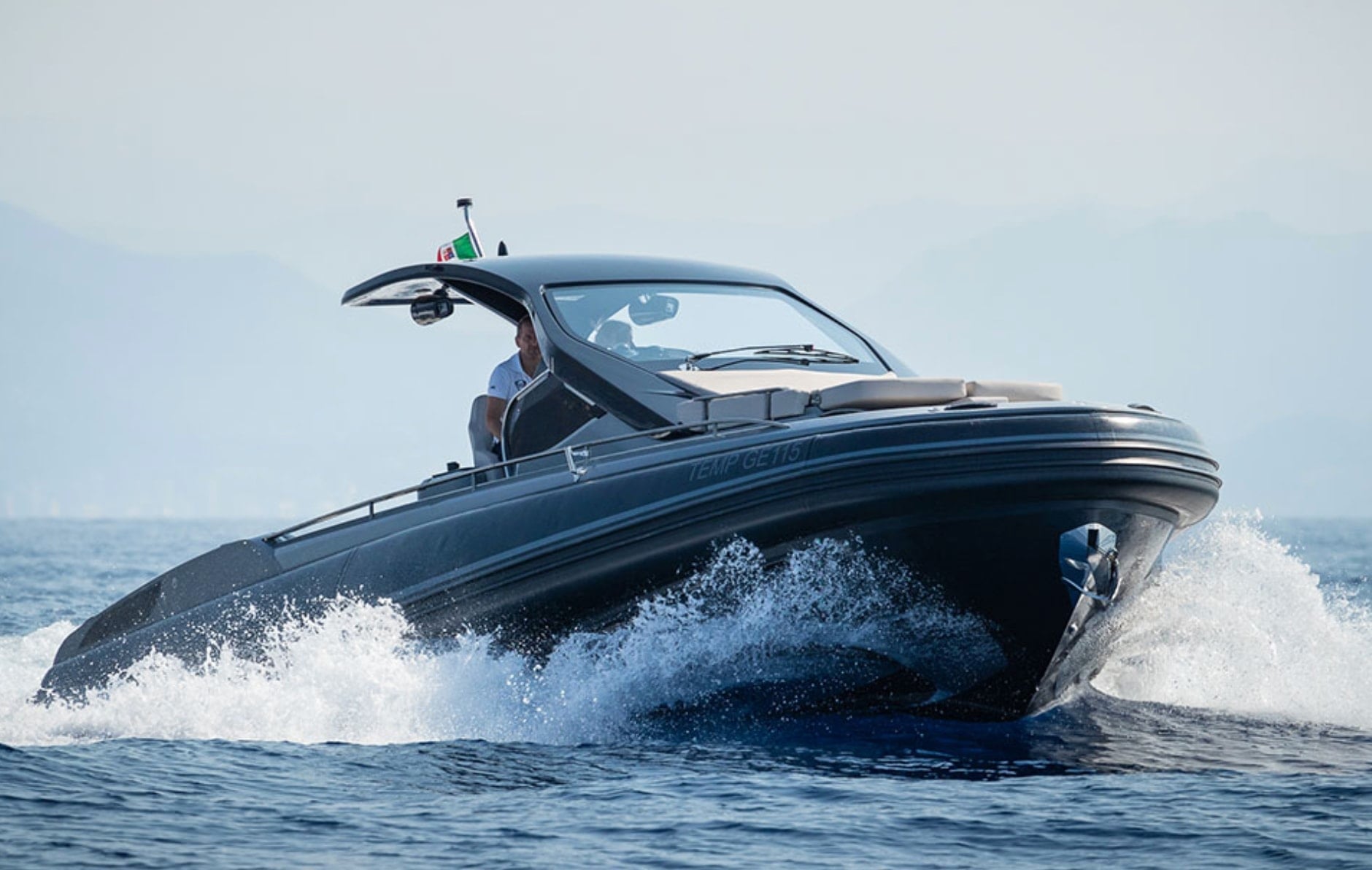
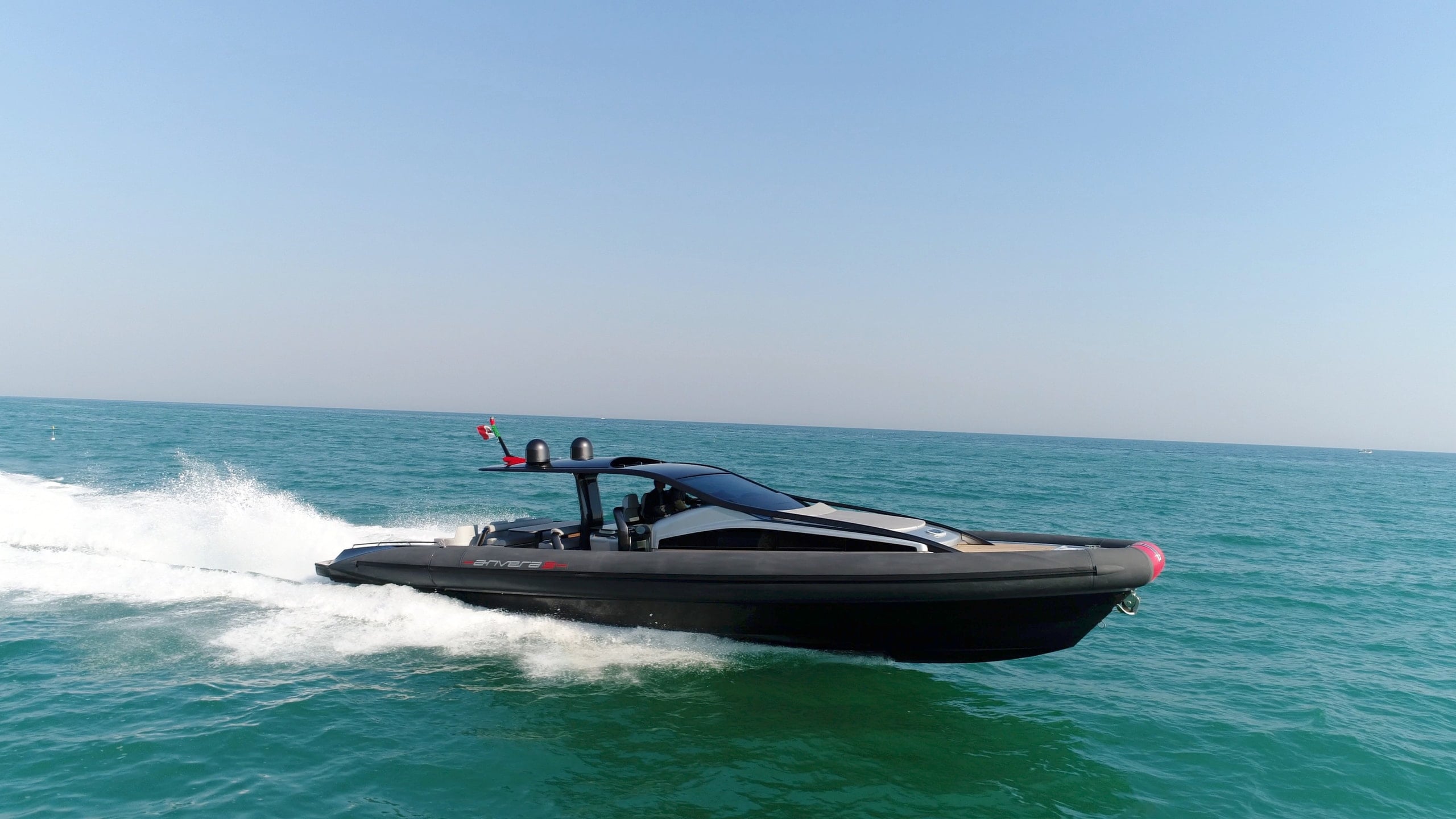
The Anvera 55 is the build we ask the Misano Adriatico yard for when an owner's brief calls for a serious carbon-RIB platform that doubles as an open dayboat, without the weight and fuel burn that a comparable composite hull would carry. Anvera builds the entire boat in carbon fibre - hull, helm area, hard top - out of two facilities in Misano: one produces the carbon, the other handles assembly and finishing. The result is a 16.8m maxi-RIB with an unladen displacement of 11 tonnes, which is exceptional for the segment.

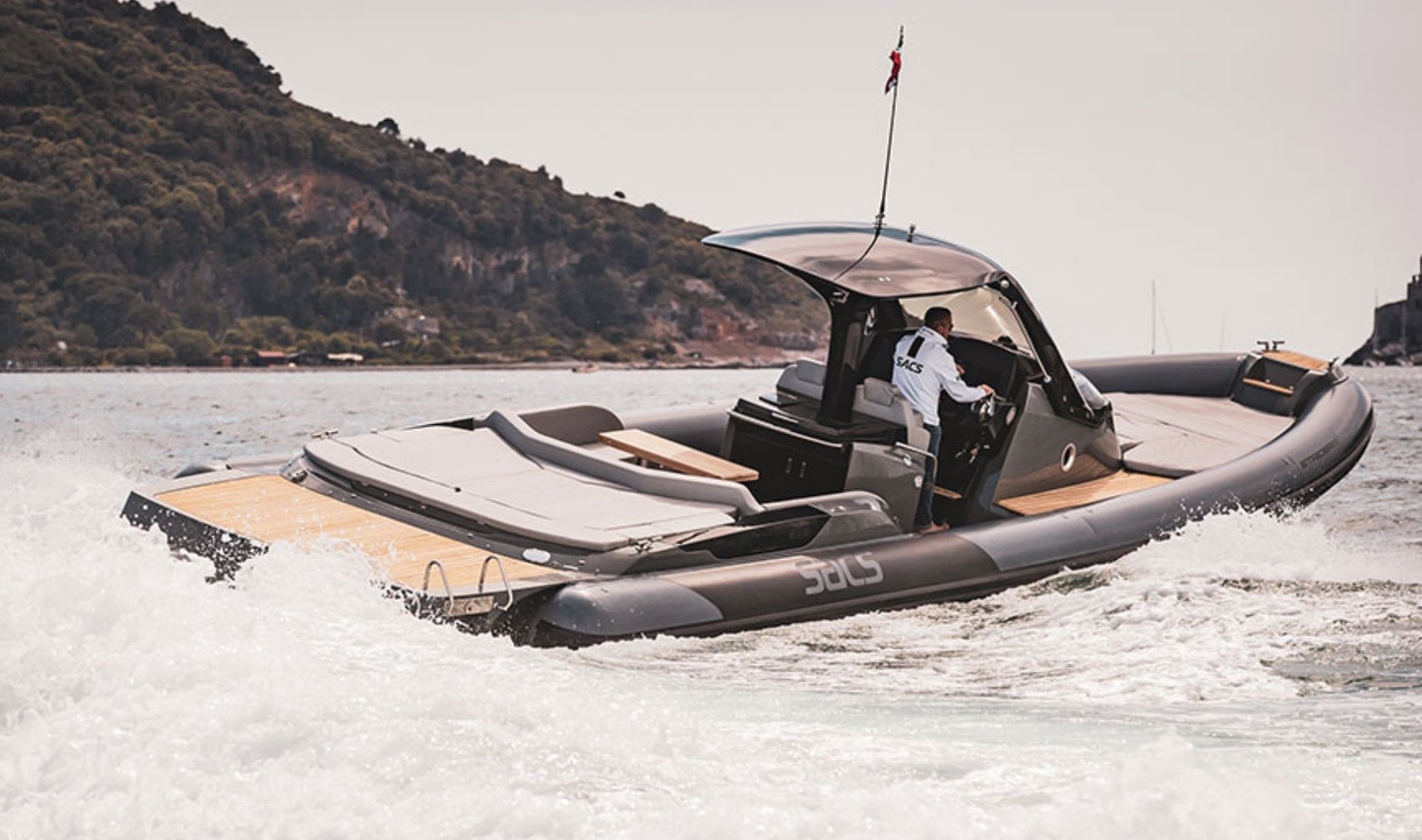
Light weight is what unlocks the performance argument. The Anvera 55 hits beyond 46 knots on a total 1,300 horsepower, where a similar-length composite boat would need closer to 1,800. That feeds directly into fuel burn at cruise and the operating envelope of the boat. Add foldable bulwarks that open the stern into a 20-square-metre beach platform, two cabins below decks, and a dinner table that seats ten, and the 55 reads as more crossover sport-cruiser than pure RIB. We see it specified as a fast crew or owner platform on yachts above sixty metres, or as a standalone.

Highlights

Built for the work.

The four details we'd point out first to a captain who hasn't seen one on the water yet.

01

Full-carbon construction

Hull, deck, helm area and hard top are built entirely from carbon fibre, with foam-filled floats. Anvera produces the carbon in-house at one Misano Adriatico facility and assembles at another, which gives the yard control over the layup quality. Unladen displacement comes in at around 11 tonnes for a 16.8m maxi-RIB, which is roughly half what a comparable composite hull would weigh.

02

46+ knots on 1,300hp

The carbon weight saving translates directly into performance. The 55 is quoted at over 46 knots on a total 1,300 horsepower, where a similar-length composite hull would need closer to 1,800. That is meaningful at the dock when the captain reads the fuel burn at cruise, and meaningful in the design office when the engine room and tankage are sized.

03

Foldable beach-platform stern

The bulwarks fold down to convert the stern into a 20-plus square-metre beach area, with the swim platform and the deck working as a single space. Combined with a large bow sun pad and a dinner table that seats ten, the 55 carries the social geometry of a much larger yacht in a 16.8m envelope.

04

Two cabins, crossover layout

Below decks the 55 has a double bed in the bow and a second cabin under the cockpit, plus a head. That makes the boat workable for occasional overnighting on a primarily-dayboat brief, without compromising the open-deck volume. We have specified the layout as a fast owner-use dayboat on a yacht in the eighty-metre bracket and as a standalone for an owner who wanted a smaller programme.

The full specification

Every number, sorted.

Dimensions

Length overall
16.80m
Beam
5.06m
Draft
0.85m
Dry weight
11,000kg
Year
2018

Performance

Top speed
46kn
Cruising speed
40kn

Power and Tanks

Engines
2x 2 x Caterpillar 550hp
Power
650hp ea.
Fuel capacity
1,600L

Construction

Hull
carbon

Hull and Dimensions

Waterline Length
15.20m

Propulsion

Total Power
1,300hp (typical)
Max Power Configuration
2 x 650hp

Accommodation

Cabins
2 (bow double, cockpit cabin)
Beach Platform
20+ sqm with foldable bulwarks

Specifications, prices, availability, and performance figures are supplied for guidance only and remain subject to confirmation by the yard, seller, broker, survey, contract, and final specification.

Questions, answered

Before you enquire.

What is the Anvera 55 and how does it differ from an Alen or Wally 55?
The Anvera 55 is an Italian carbon-fibre maxi-RIB built in Misano Adriatico, distinct from the Wally 55 (a Wally Tender limousine) and the Alen 55 (a Turkish composite open motoryacht). The defining feature is the full carbon construction across hull, deck and hardtop, which gives the boat a 11-tonne unladen displacement and a 46-knot top end on materially less power than a composite peer would need.
Why carbon, and what is the trade-off?
Carbon saves weight, which feeds into top speed, fuel burn at cruise, and the size of the engines and tanks the design office has to accommodate. The trade-off is build cost: the Anvera sits above a comparable composite open boat on price. For owners who value the performance envelope and the engineering signature, the cost is worth it. For owners who would rather have a larger composite hull at the same budget, an Alen or a Sanlorenzo is the right answer.
Can the Anvera 55 be carried on a mothership?
At 16.8m and 11 tonnes light, it is too large for a typical garage and is usually carried alongside the mothership or run as a standalone. We have specified it on yachts above sixty metres as a primary owner-use dayboat, parked on a side-loading crane or a stern dock arrangement. The full-load weight rises to 13 tonnes, which is the number to design the lifting plant against.
How does Anvera build the boat?
Anvera operates two facilities in Misano Adriatico. The first produces the carbon-fibre components, including the hull and structural elements. The second handles assembly, fit-out and final finishing. That vertical integration gives the yard control over the layup quality, which matters on a carbon hull where consistency in the resin-to-fibre ratio determines the structural numbers and the long-term durability.

The yard

Anvera

Misano Adriatico, Italy

Anvera is an Italian builder operating under the LG-Yacht banner out of Misano Adriatico, on the Adriatic coast. The company traces its composite-materials roots back to 1991, when its predecessor was producing racing catamarans, and the Anvera brand itself launched its first production boat, the 55, in 2015. The design language comes from Aldo Drudi, a collaborator who arrived from motorsport, and that provenance is readable in every hull: aggressive, low-profile silhouettes that sit closer to a hypercar sketch than a conventional tender.

The build proposition is what we keep coming back to. Every hull is constructed entirely in carbon fibre with epoxy resin, and LG-Yacht manufactures its own carbon in-house at a dedicated facility separate from the assembly and finishing shop. The result is a power-to-weight ratio that lets the range reach competitive speeds on smaller, lower-emission engine packages rather than brute-forcing performance through horsepower alone.

The current range runs from 42 to 66 feet, with model numbers that correspond directly to LOA in feet: the 42 (12.9m), 48, 55, 58 (17.5m), and 66, plus the high-performance 42 Speedster. Each model is configurable as a chase boat, day cruiser, weekender, or mini support vessel. The 58 carries sixteen guests and is quoted at a 53-knot top speed; the 48 reaches 50 knots while returning 3.4 litres per mile at 40 knots. A signature feature across the range is the fold-down stern terraces that convert the aft deck into a floating beach-club platform - practical for a water-toy programme and directly relevant to how chase-boat programmes are run today. Commercial-code certification to MCA SCV MGN-280 and Malta CYC 2020/2024 standards is available.
Last call · Available

Enquire about the 55.

Anvera · Misano Adriatico, Italy

Indicative price fromPrices on request
LOA
16.8m
Beam
5.06m
Top Speed
46kn
Guests
16

Tell us about your yacht, your programme, and the missions 55 needs to handle. We come back within 48 hours with a written assessment - fit for the brief, lead time, and trade-offs against alternatives in the same band.

Prefer to talk? +44 (0) 77180 88055 · other ways to reach us