Ask "what is the best superyacht tender" and most of the internet answers with a gallery of the prettiest boats from the builders who advertise hardest. That is not a useful answer to an owner or a project manager. The best tender is the one that fits through the garage door, carries the people the programme actually moves, survives its first season in salt, and does not blow the budget on a spec the brief never needed. "Best" is a function of the brief, not a leaderboard.
This guide is the owner's-side version: the tender types and which owner each suits, how to size one to your yacht, the builders we shortlist most often in each category, and the method for choosing. Where a category needs the full picture, follow the link into its pillar. To compare specific boats head to head, every model on the register can be put side by side in a spec comparison.
The tender types, in plain terms
Before any builder name matters, the taxonomy. A superyacht programme draws from these:
| Type | What it is | Who it suits |
|---|---|---|
| Limousine | Enclosed, climate-controlled, dressed interior | Formal all-weather guest transfer |
| Open / sport | Uncovered fair-weather day boat | Short hops, a capable second helm |
| RIB | Rigid hull, inflatable or foam collar | The versatile workhorse, guest or crew |
| Chase boat | Separate fast hull, own fuel and crew | Missions and range beyond the garage |
| Beach lander | Bow-ramp, shallow draft | Dry landings on an open beach |
| SOLAS rescue | Coded, self-righting life-saving craft | Mandatory carriage above 500 GT commercial |
| Support vessel | A yacht in its own right | Toys, helicopter and crew beyond the garage |
Most owners need two or three of these, not one; the fleet planning guide sets the mix by yacht size.
How to size a tender to your yacht
The yacht's length is a weak proxy; the garage volume is the real constraint, and garage tenders have actually shrunk over the last decade because the box is fixed while guest expectations rose. As indicative industry guidance (not a rule), YachtBuyer maps a 20 to 25 m yacht to roughly a 3.7 m garage tender, 25 to 30 m to about 4.7 m, and 30 to 40 m to about 5.8 m, with deck-mounted boats running larger. Crew and guest capacity tracks length: a 5 to 6 m boat carries roughly 8 to 10 people, a 7 to 8 m boat 12 to 14. Treat these as starting points, then size to the actual garage and davit envelope, see tender garage sizing.
How "best" is actually decided
Four constraints decide the shortlist, and almost every hard call collapses to one of them:
- Garage envelope. The boat has to enter the door, sit on its cradle and clear the deckhead with launch gear installed. A 150 mm overage is not a rounding error.
- Mission and capacity. Guest transfer, watersports, diving, provisioning, rescue, each pulls the spec a different way. Force a primary mission before looking at boats.
- Certification. A 500 GT commercial yacht needs a SOLAS rescue tender as carried equipment; that decision cascades into the rest of the fleet.
- Build standard. Vacuum-infused composite versus hand-laid, painted versus gelcoat, the interior fit-out: this is where two boats with the same brochure length diverge by 40 per cent on price. See custom vs semi-custom vs production.
With those fixed, the category shortlists below become useful rather than decorative. Each has its own deep-dive: the best limousine tenders, chase boats, RIB tenders, beach landers and SOLAS rescue tenders.
Best limousine tenders
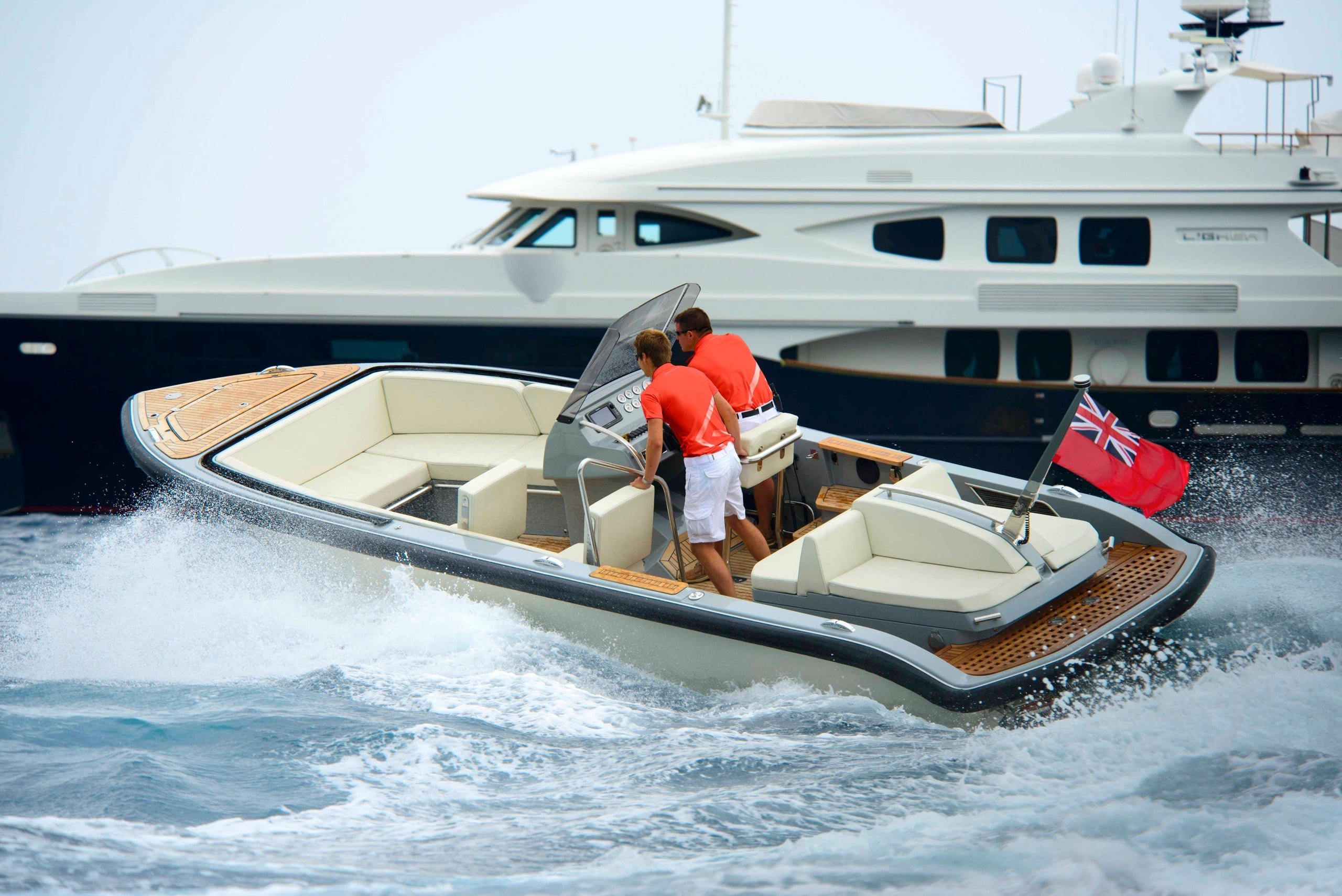
The enclosed, climate-controlled boat that moves owner and guests in any weather, in formal dress, dry. The mainstream sits at 8.5 to 12 metres and the segment is concentrated: Pascoe, the British semi-custom and custom specialist with around 20 years building bespoke superyacht tenders; Compass, the UK full-custom builder with over 30 years' experience; Wajer on a semi-custom track; and Castoldi where waterjet draft is needed. Hodgdon and Falcon are credible outside the linked register. Best is decided by cabin layout, the garage-height penalty and the finish allowance, the limousine tenders pillar covers the spec inputs in full.
Best open and sport tenders
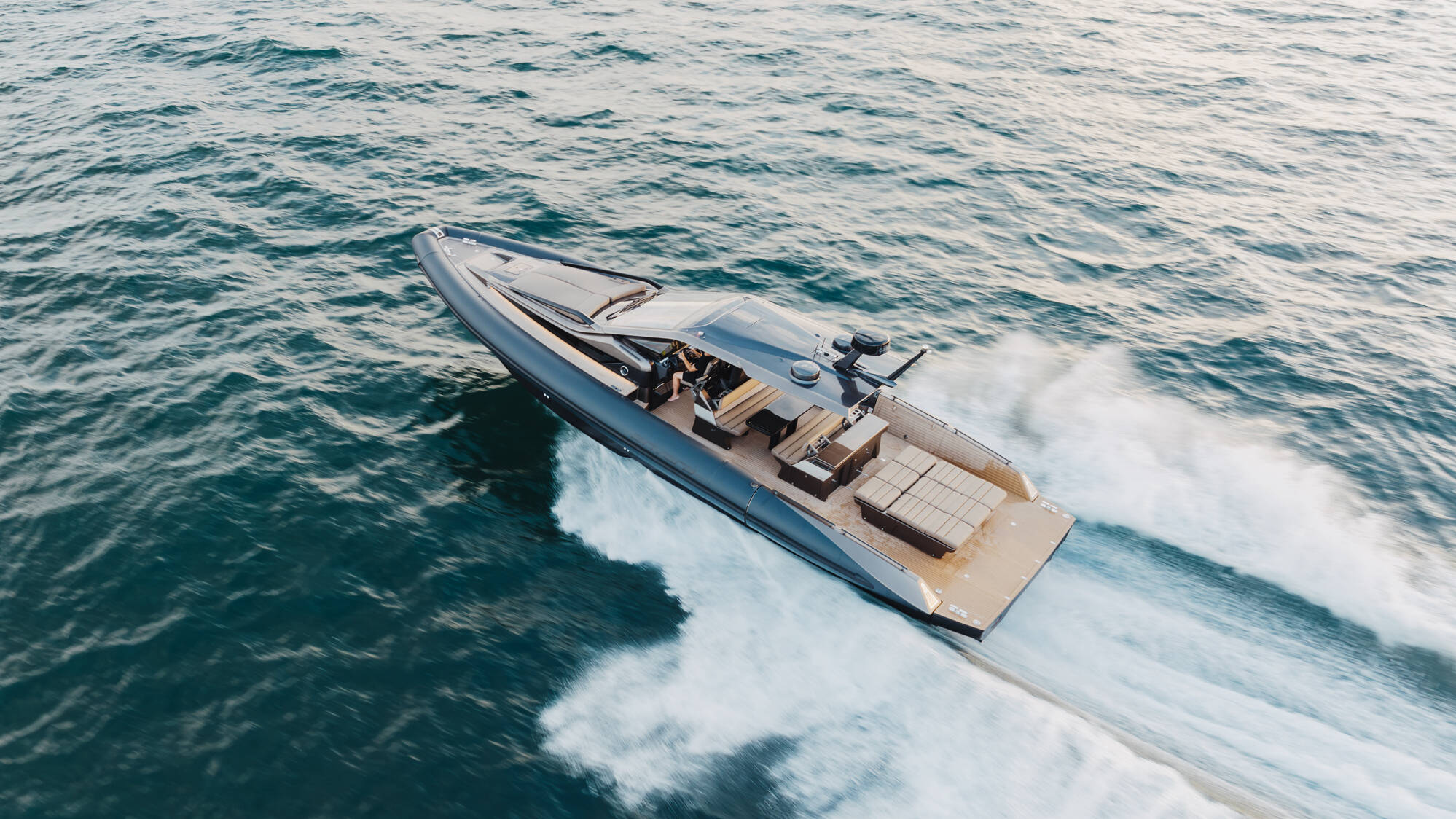
The fair-weather day boat for short hops and a capable second helm. This is the broadest, most competitive category: Wajer, Vanquish, Anvera, VanDutch, Windy and Axopar all field credible hulls, with Pascoe and Castoldi on the bespoke end. Best is a balance of cruise speed at half load, ride quality in chop, and how the boat sits against the mothership's backdrop. Start at the tenders pillar.
Best RIB tenders
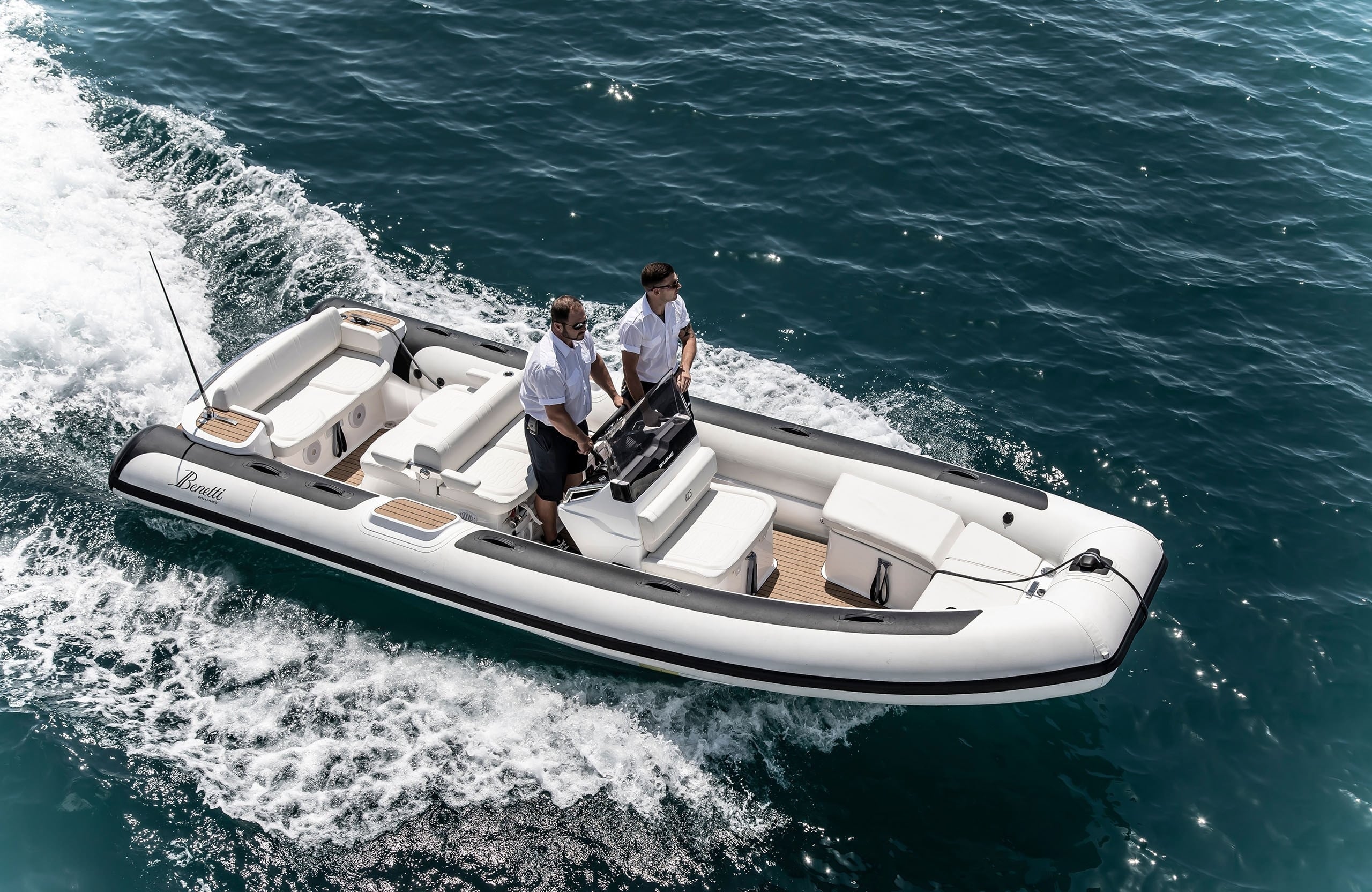
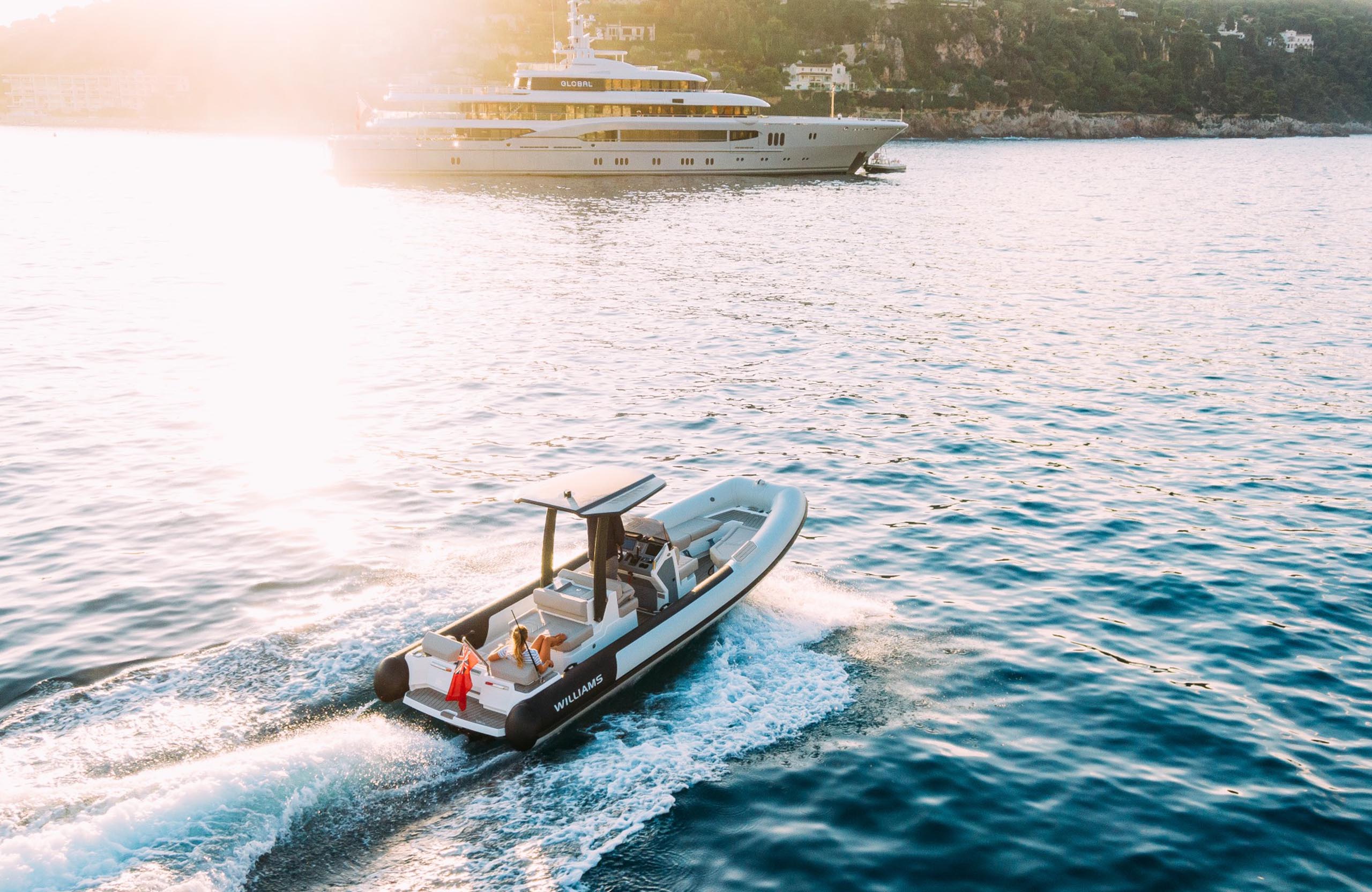
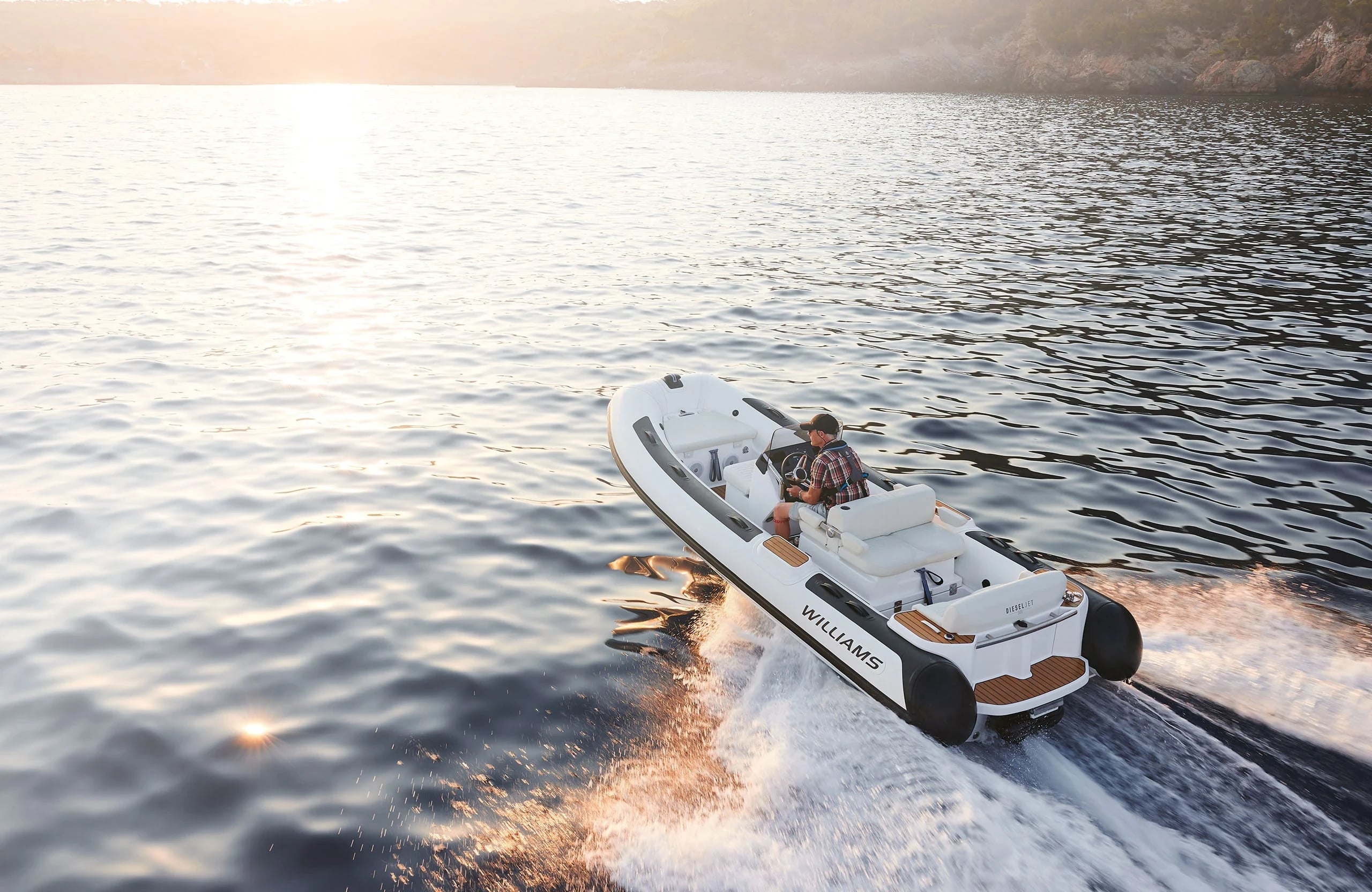
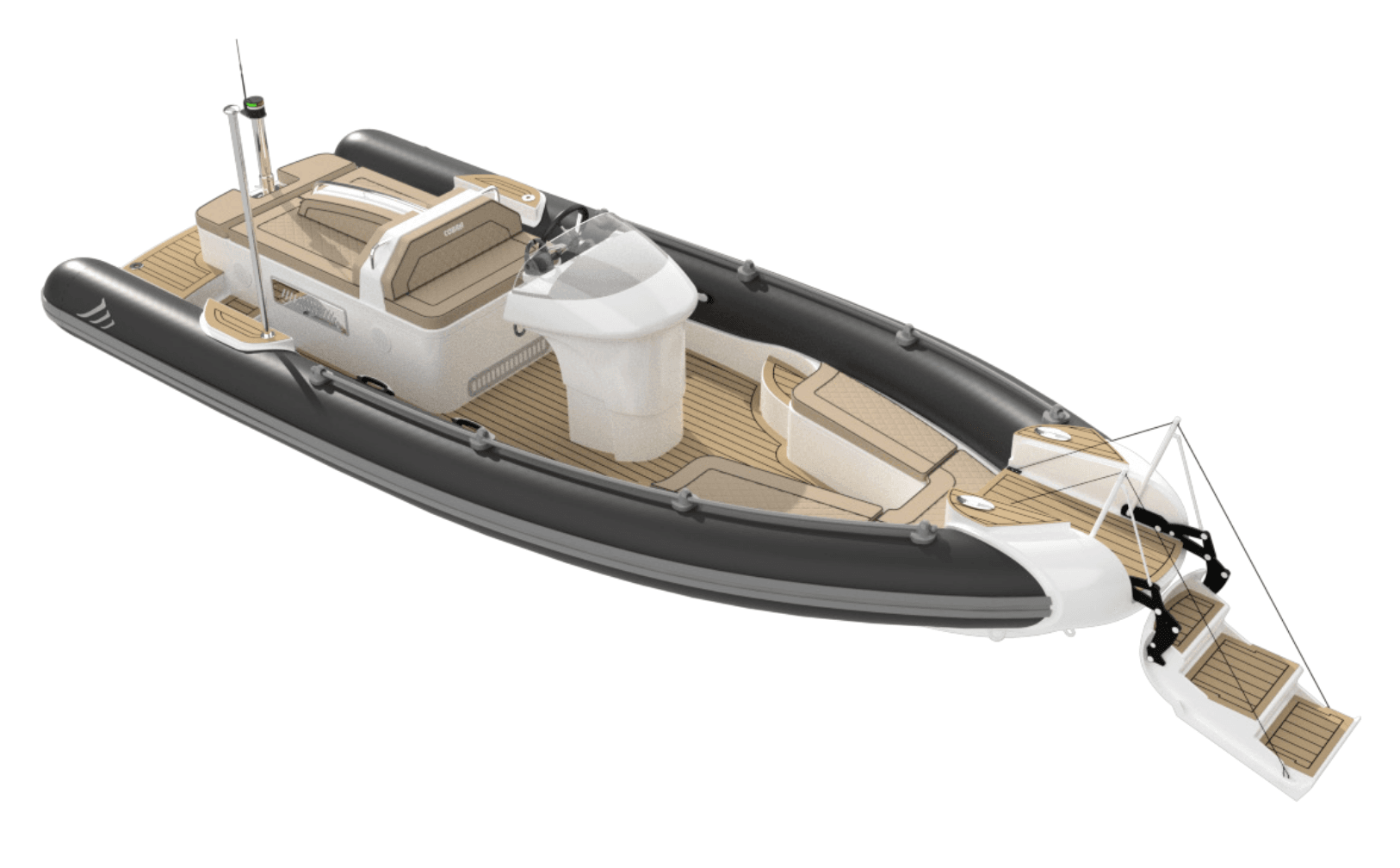
The workhorse format, forgiving alongside the swim platform, stable at rest, more passengers per metre than a hard hull. Williams has built jet-driven RIBs since 2004 and dominates the guest segment for swim-platform safety; SACS, Brig, Novamarine and Novurania cover crew, guest and sport RIBs; Scorpion and Cobra sit on the performance end; Xtenders builds custom carbon hulls. Specify Hypalon or foam collars for a boat that lives exposed. The RIB tenders pillar covers tube material, drivetrain and the full shortlist.
Best chase boats
Not a tender, a separate hull that follows the yacht under its own power, 8 to 20 metres. The names that recur: Wajer and Wally on the day-chase aesthetic, Vanquish in the 12 to 16 m sport-hardtop band, Pascoe on the larger hulls, with Sunseeker and Brabus credible for a known performance brand. Best is decided by range at the mothership's transit speed and the use case. Full breakdown on the chase boats pillar; chase boats explained settles whether you need one at all.
Best beach landers
Bow-loading, shallow-draft boats that put guests dry on the sand, uncommon below 9 m, mainstream at 10 to 12 m. A concentrated segment: Wajer, SACS, Castoldi, Vanquish, Goldfish and Pascoe for limo-beach-lander hybrids. Best is decided by the bow-ramp mechanism and the cooling-intake design on sand, covered on the beach landers pillar.
Best SOLAS rescue tenders
Coded life-saving equipment, mandatory on commercial yachts above 500 GT, not a guest toy. A small market dominated by specialists holding current type approvals: Pascoe builds the bulk of the fleet, with Cobra, Whitmarsh and Williams (compact DieselJet SOLAS variants) on the shortlist. "Best" means the right type approval for your flag and a launching arrangement that meets the five-minute rule, the SOLAS tender compliance guide is the detail.
Best support vessels
When the programme has outgrown the garage, shadow yachts carrying the toys, helicopter and crew the mothership cannot. A different asset class and cost band; the support vessels pillar covers where the boundary sits against a large chase boat, and we will say plainly when a brief has tipped into shadow-yacht territory.
Reference specifications
Indicative published figures across three reference boats, to show the spread, not a ranking:
| Spec | Hodgdon Convertible | Castoldi 34 Limo | Williams DieselJet 625 |
|---|---|---|---|
| LOA | 9 to 11 m | 10.5 m | 6.32 m |
| Beam | 2.95 m | 2.8 m | 2.41 m |
| Weight | 6,400 kg | 5,800 kg (dry) | Not published |
| Power | Volvo D6-440 DPI | 2x Yanmar 250 hp waterjet | 1x Yanmar 4LV, 195 hp |
| Top speed | 35 kn | 35 kn | 40 kn |
| Capacity | 12 | 12 + 2 | 11 |
Sources: BOAT International, best tenders 2025 and Williams. No builder in this category publishes list prices; treat any price figure as an indicative working band, not a quote.
On our register, with live specs:
Castoldi 34See the boats
This is not just a reading list. Every category links to the live register: browse new-build tenders and pre-owned tenders for sale, see what is available now, or put any two boats, new or used, into a side-by-side comparison. The category deep-dives each carry the actual new and pre-owned boats on the register for that category.
The method, not the leaderboard
The useful takeaway is the process, not a single name. Fix the brief and the garage envelope, force a primary mission, decide the certification path, then shortlist three or four builders in the right category and put them in a side-by-side comparison on the specs that actually bind, recovery sea state, loaded weight, cabin noise, parts support, not the brochure top speed. The complete guide to buying a superyacht tender is the full sequence; how to choose a superyacht tender is the decision-tree version.
We work this from the owner's side of the table, not the builder's. If a yard is steering a brief toward the hull they have a slot for rather than the one the programme needs, we will say so. Tell us the mothership, the programme and the missions the boat has to handle, and the shortlist follows.