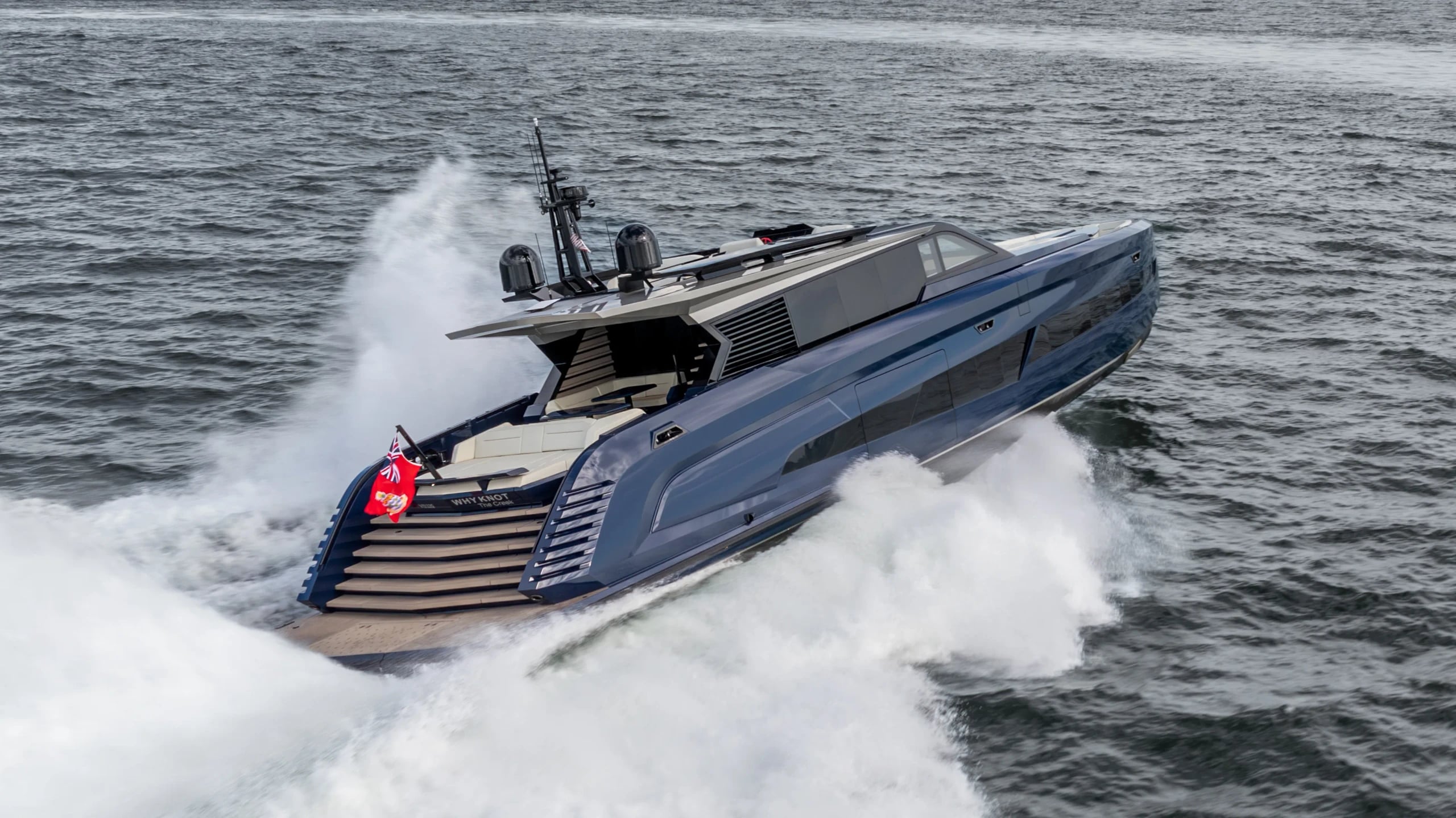
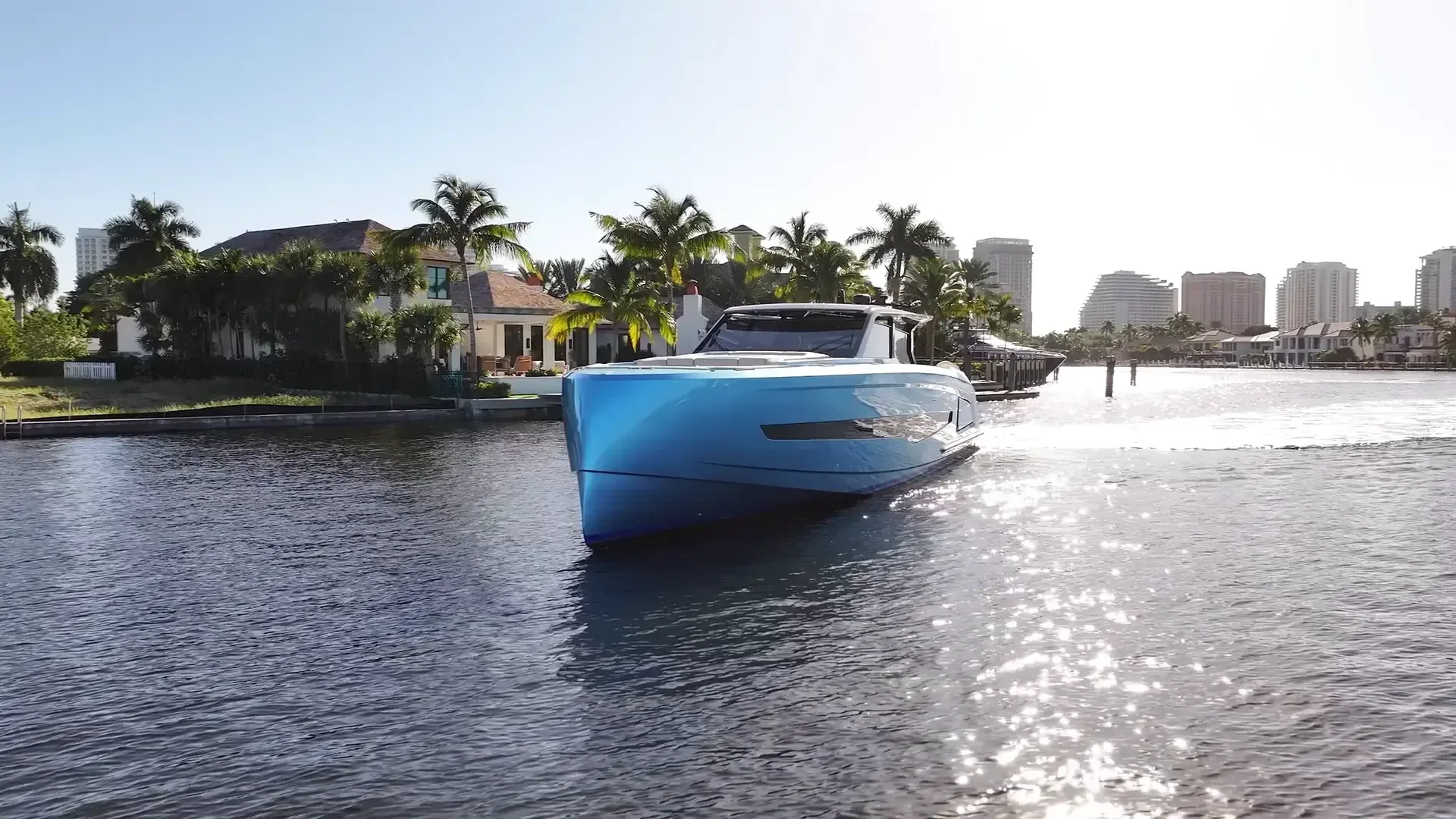
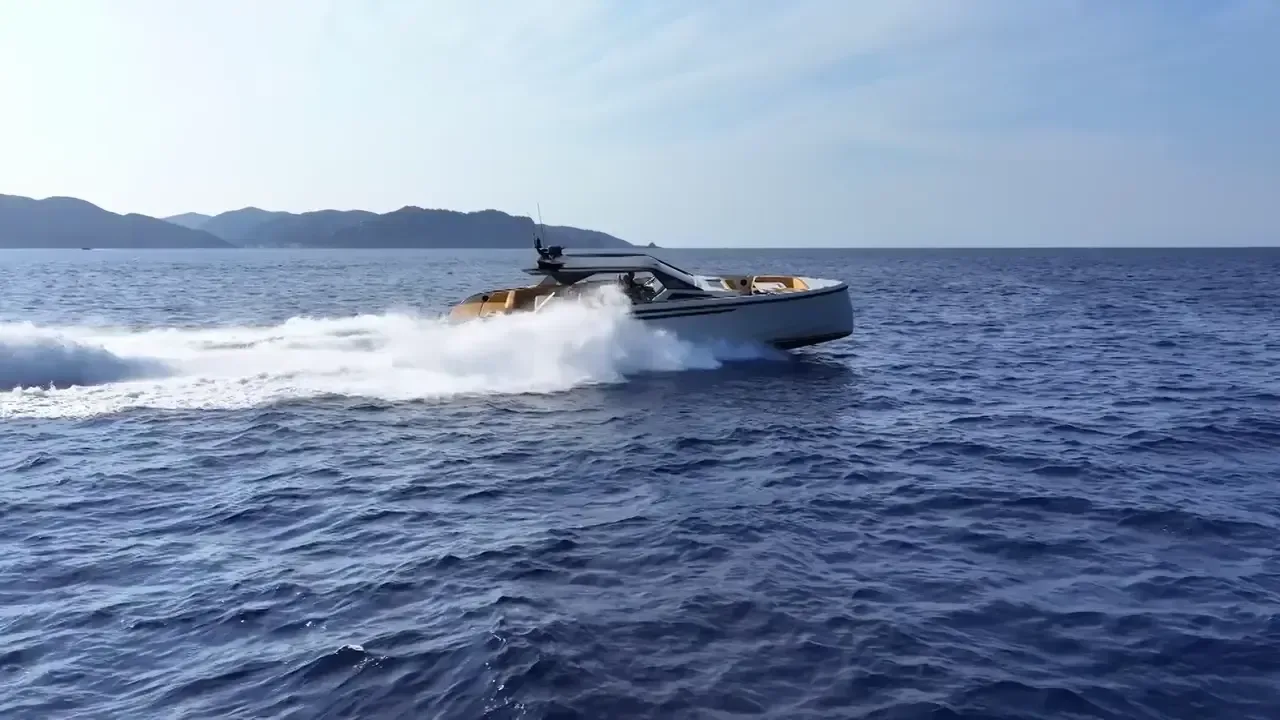
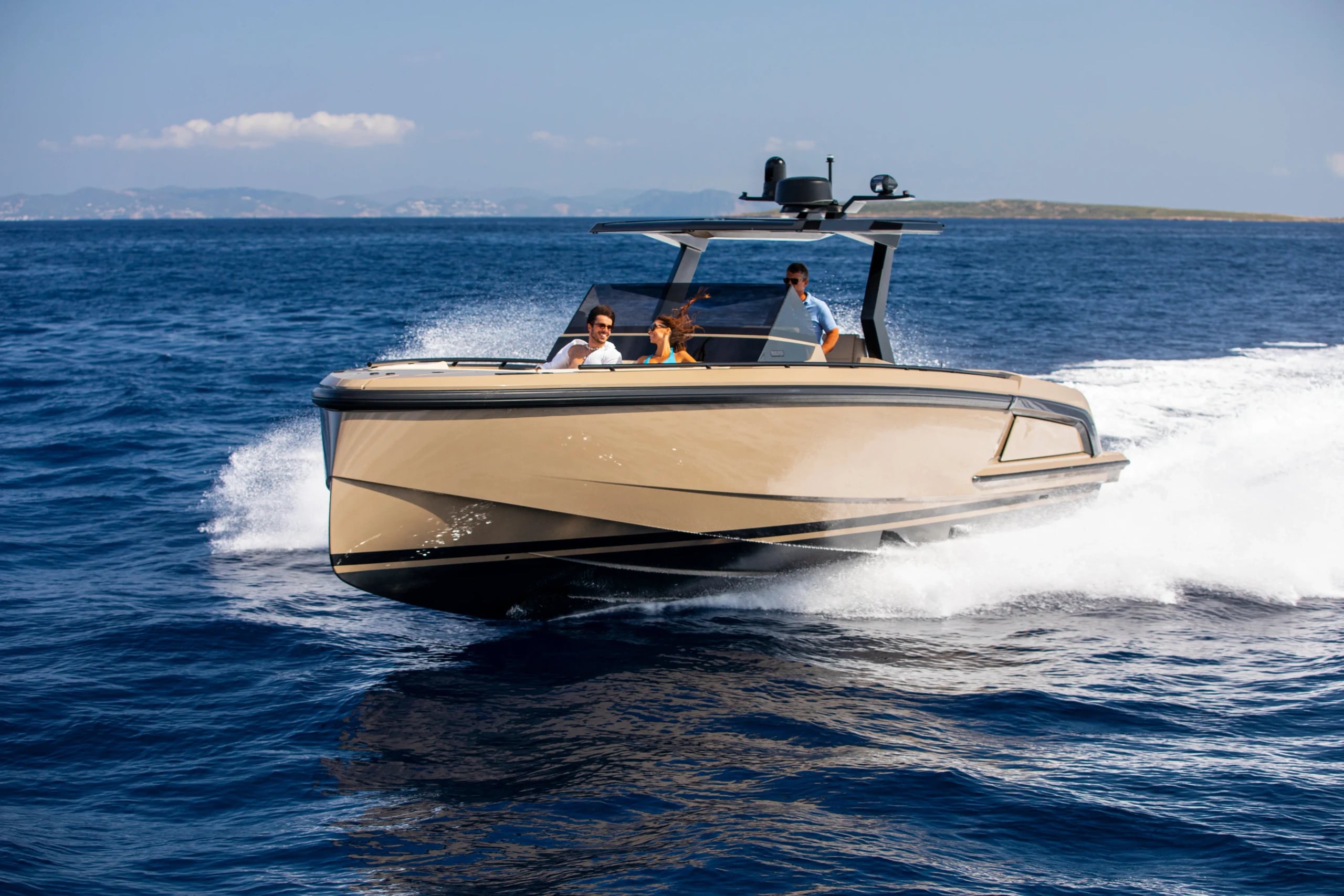
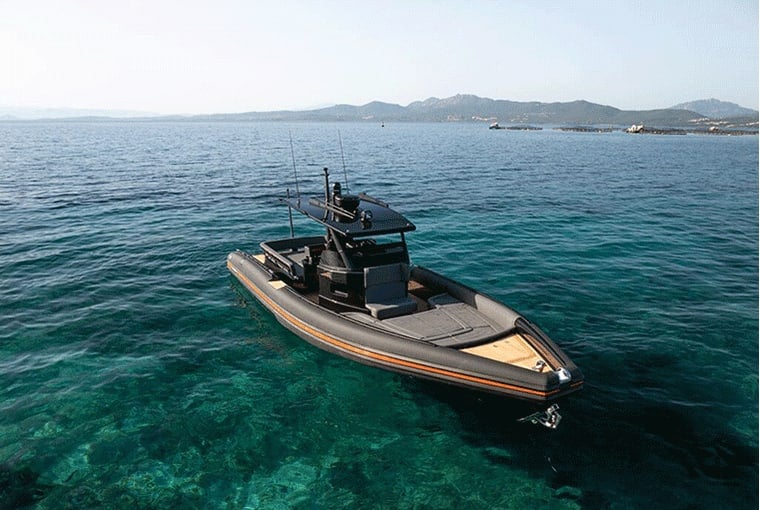
A decade ago, the chase boat conversation barely came up at the brief stage. Owners bought a yacht, the yacht had a garage, the garage had a tender, and that was the fleet. Now, on roughly half the briefs we work on for yachts of 50 m and above, a chase boat appears within the first three meetings. Wajer themselves told Boat International that around 35 per cent of their boats are sold as chase boats. The category has grown from a curiosity into a structural part of the fleet.
This guide explains what a chase boat actually is, why owners buy one alongside a tender, the size and cost bands you should expect, the dominant use cases, and how to decide whether the brief needs one or whether a larger primary tender will do. For the deeper category structure, the chase boats pillar is the entry point.
What is a chase boat
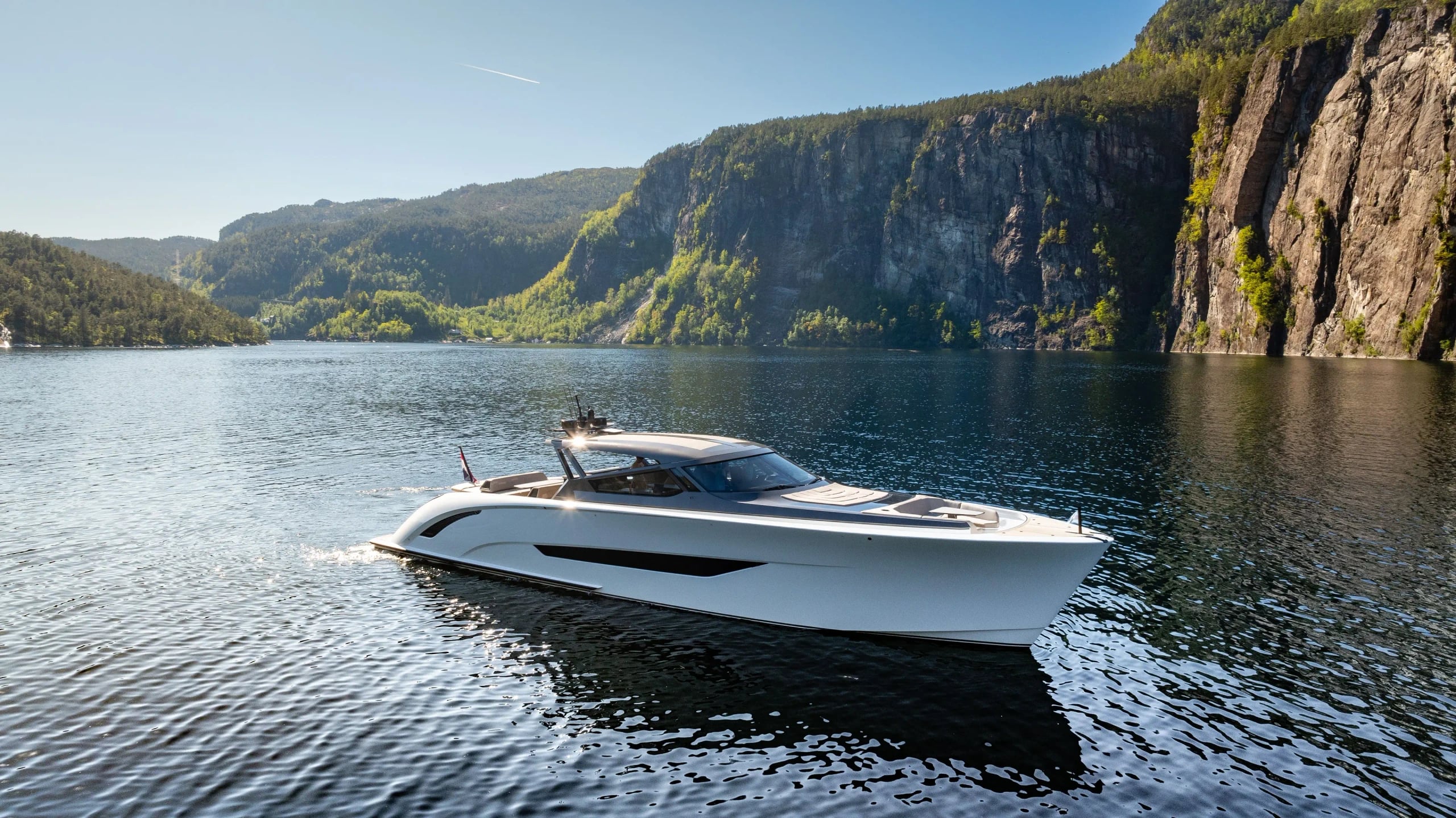
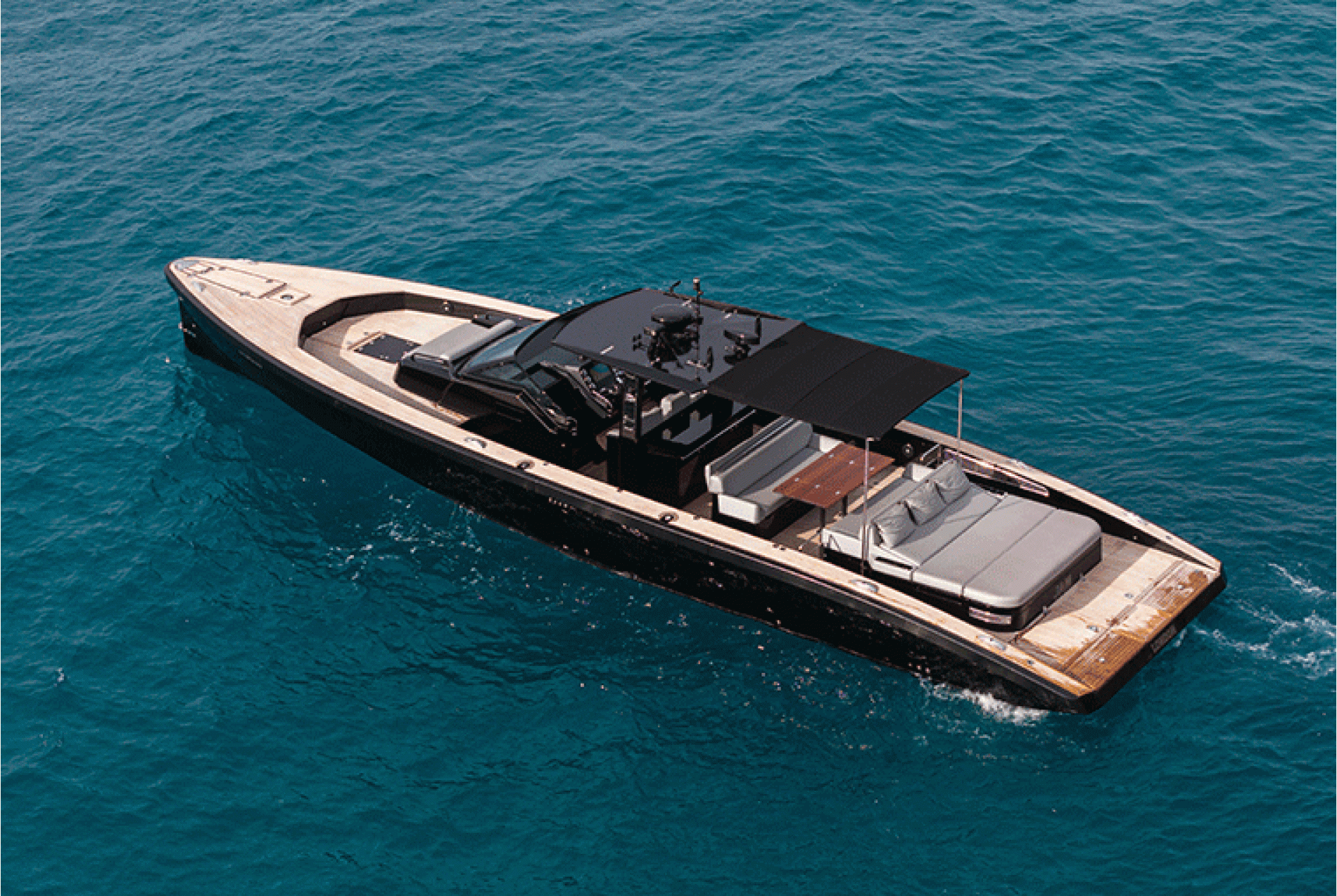
A chase boat is an independent vessel that travels with the mothership rather than inside it. Length usually sits between 8 m and 20 m. The hull is hardtopped, the engines are typically twin or quad outboards, the cockpit is large enough for hospitality, and the boat is fast enough to keep up with a 16 to 18 knot mothership cruise without having to be towed. It is, in effect, a second yacht in miniature.
The category sits between three other things, and the boundaries are real:
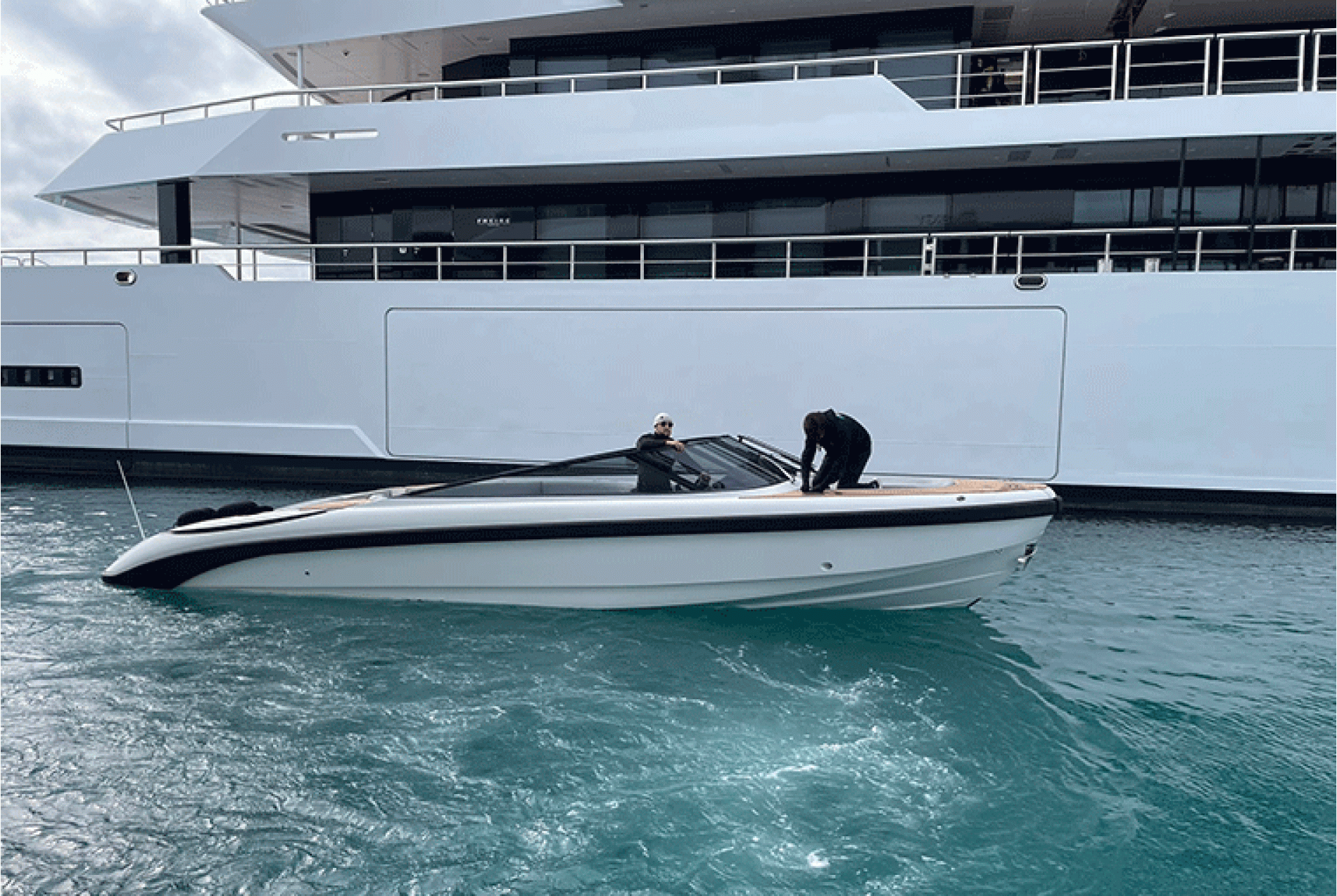
- A tender lives in the garage and is launched from the mothership for short runs to shore. See tenders and tender vs chase boat.
- A shadow vessel is a substantial commercial-built support yacht that carries the toy fleet, the helicopter, and crew. See shadow yachts and chase boat vs shadow vessel.
- A sport tender is a small fast guest toy that lives in the garage. See sport tenders.
A chase boat is none of those. It is too big for the garage, too small to be a shadow vessel, and too capable to be a sport toy. The commonly cited industry shorthand is a boat that cruises at 30 to 35 knots and holds station with the yacht; the what is a chase boat page covers the definition in more depth.
Side by side, the three-way distinction that the "vs support vessel" and "vs tender" questions really turn on:
| Tender | Chase boat | Support / shadow vessel | |
|---|---|---|---|
| Typical size | 4 to 11 m | 8 to 20 m | 30 m and up |
| Where it lives | In the yacht's garage | Alongside, berthed nearby or run separately | A yacht in its own right |
| Job | Ship-to-shore, day use | Activities, range, guest movement | Carries tenders, toys, helicopter, crew |
| Crew | Yacht crew | One or two dedicated | Own permanent crew |
There is no single hard line where a chase boat ends and a support vessel begins; treat it as a spectrum of capability and cost.
Why owners are buying them
Three structural shifts in the market have pushed chase boats into the mainstream:
- Garage size has lagged guest expectations. A 60 m yacht built in 2010 typically has a garage sized for a 7.5 m tender. Today's owner wants to fit eight guests in air-conditioned comfort with WiFi and a galley, which needs a 10 to 11 m hull. The chase boat solves the problem without ripping the yacht apart.
- Charter has reset the spec. Charter guests bring divers, fishermen, kiteboarders, and water-ski instructors. The mothership cannot host all of that without crowding the aft deck. A chase boat absorbs the activity.
- Owners are travelling further. Cruising patterns now stretch from the Med to the Maldives in a single year. A chase boat parked at the local marina, or shipped a leg ahead, gives the program flexibility that the mothership alone cannot.
The Wally Tender, the Wajer 77, the Pascoe SY series, and the Maori range have all grown out of this demand. Builders that started in the tender market have effectively split their order book into garage-fitted tenders and free-standing chase boats.
Size and configuration bands
Chase boats cluster into three operational bands:
| Band | Length | Typical engines | Guests | Mothership size | Indicative price |
|---|---|---|---|---|---|
| Compact day chase | 8 to 11 m | Twin outboards 300 to 400 hp each | 6 to 8 | 40 to 60 m | 350,000 to 700,000 euros |
| Mid chase | 11 to 15 m | Triple to quad outboards 400 to 600 hp each | 8 to 12 | 60 to 80 m | 800,000 to 2 million euros |
| Large chase / hardtop | 15 to 20 m | Quad outboards or diesel sterndrives | 10 to 16 | 80 m and up | 2 to 5 million euros |
For a fuller cost breakdown by size and finish, see chase boat sizes and chase boat cost.
The compact band is dominated by Wajer, Wally, and the Italian builders. The mid band is where Wajer's 77, the Pascoe SY series, and Maori 65 sit. The large band is the territory of Hodgdon chase boats and the larger Pascoe hulls, alongside specialists like Bering, Outer Reef, and Vanquish.
Use cases that justify a chase boat
Owners do not buy a chase boat without a clear use case. The five we see most often:
1. Sport fishing
A dedicated sport-fishing chase boat lets the mothership stay on station, stops bait and fish from coming aboard the main deck, and keeps the rod holders, livewell, and fighting chair off the yacht. The owner who fishes seriously is the easiest case to argue: the chase boat pays for itself in deck preservation alone.
2. Diving
Diving operations need tank racks, a freshwater shower, a dry kit area, and a swim platform that can be hosed down. A chase boat absorbs the salt and the wet kit; the mothership stays clean.
3. Watersports
Wake foiling, e-foiling, kiting, water-skiing, and the inflatable toy fleet all need a dedicated platform. See watersports use case. A chase boat with a tower, a winch, and a flat aft deck is the right tool. Asking the main tender to do this work shortens its life.
4. Guest shuttling
On busy charter weeks, shuttling guests between airports, restaurants, and the mothership is a job in itself. A chase boat with a captain and a stewardess can run the shuttle without disrupting the yacht's program. Some charter operators now spec a chase boat specifically for this reason.
5. Provisioning and crew movement
The provisioning run is the unglamorous use case that captains love. Daily fresh food, laundry, parts, and crew rotations are easier with a dedicated boat. On long charters, the chase boat saves the main tender from being a delivery van.
Island hopping and family day-boat use, covered in family day boat chase, round out the fleet.
6. Operational and safety support
The use case the sales pages skip. A chase boat run ahead of the yacht scouts anchorages and pilotage, carries a medical-evacuation and man-overboard capability the garage tender does not, holds a security perimeter, and coordinates with port authorities before the mothership arrives. For owners and captains this operational and safety role is often the quiet justification that turns a "nice to have" into a line in the build budget, independent of fishing or watersports.
Range, fuel, and how the chase boat keeps up
A chase boat that cannot hold the mothership's pace is a problem in slow motion. The number that matters is range at cruise speed equal to the mothership's transit speed. Most superyachts cruise at 12 to 16 knots; the chase boat needs to make the same speed comfortably with a usable range.
Typical figures across the major platforms:
- A 14 m Wajer 77 on quad 400 hp Mercury Verados cruises at 30 to 35 knots and has a range of around 280 nm at 30 kn, longer at slower speeds.
- A 12 m Pascoe with twin 600 hp diesels through Hamilton jets covers 250 nm at 28 kn.
- A 17 m Hodgdon Venture chase boat with twin Volvo IPS diesels covers over 400 nm at cruise.
For the headline numbers across the market, see chase boat range and chase boat specifications. The general rule: outboards for sub-15 m boats, diesel sterndrives or jets for above. Outboards win on weight and serviceability; diesels win on fuel burn and range.
Towing versus running independently
A chase boat can either tow behind the mothership on long passages or run independently. Both are common; both have downsides.
Towing, covered in detail in chase boat towing, saves fuel and crew but limits the mothership to a slower transit speed (typically 10 to 12 knots) and exposes the chase boat to bridge slap, fouled lines, and chafe. Most insurance underwriters will limit towing distance and sea state in the policy; check before assuming you can tow from Mallorca to Malta.
Running independently keeps the chase boat fresh and lets the captain choose its own weather window, but doubles the fuel bill and the crew workload. For long ocean legs, the answer is usually neither: ship the chase boat as deck cargo on a yacht transport ship, or park it at the destination with a delivery captain.
Crew, charter, and operating cost
A chase boat needs at least one dedicated crew member, typically a chase boat captain with a Yachtmaster Offshore or commercial small craft licence and either a deckhand or a stewardess depending on use. Annual operating cost typically runs 8 to 12 per cent of capital value, including berthing, fuel, insurance, maintenance, crew, and the inevitable damage budget.
A growing share of chase boats are themselves available for charter when the mothership is off-program. This is not yet a substantial revenue line but it offsets the berthing and crew cost in a meaningful way for owners who go charter route.
How to decide whether you need one
Run the brief through five questions:
- Does the yacht's garage actually fit the tender the guests need? If no, chase boat or refit.
- Is there a daily activity (fishing, diving, watersports) that demands a separate platform? If yes, chase boat.
- Does the owner want to cruise faster than 12 knots in transit? If yes, the chase boat must run independently or be transported.
- Is the operating budget elastic enough for a second crew of one or two? If no, a larger primary tender is the answer.
- Will the chase boat be used at least 60 days a year? If no, charter one when needed.
Three or more yes answers, and the brief warrants a chase boat. Fewer, and the spec on the primary tender probably needs to grow instead.
Builders worth shortlisting
The dominant names in the chase boat market today, with deeper coverage on each builder page:
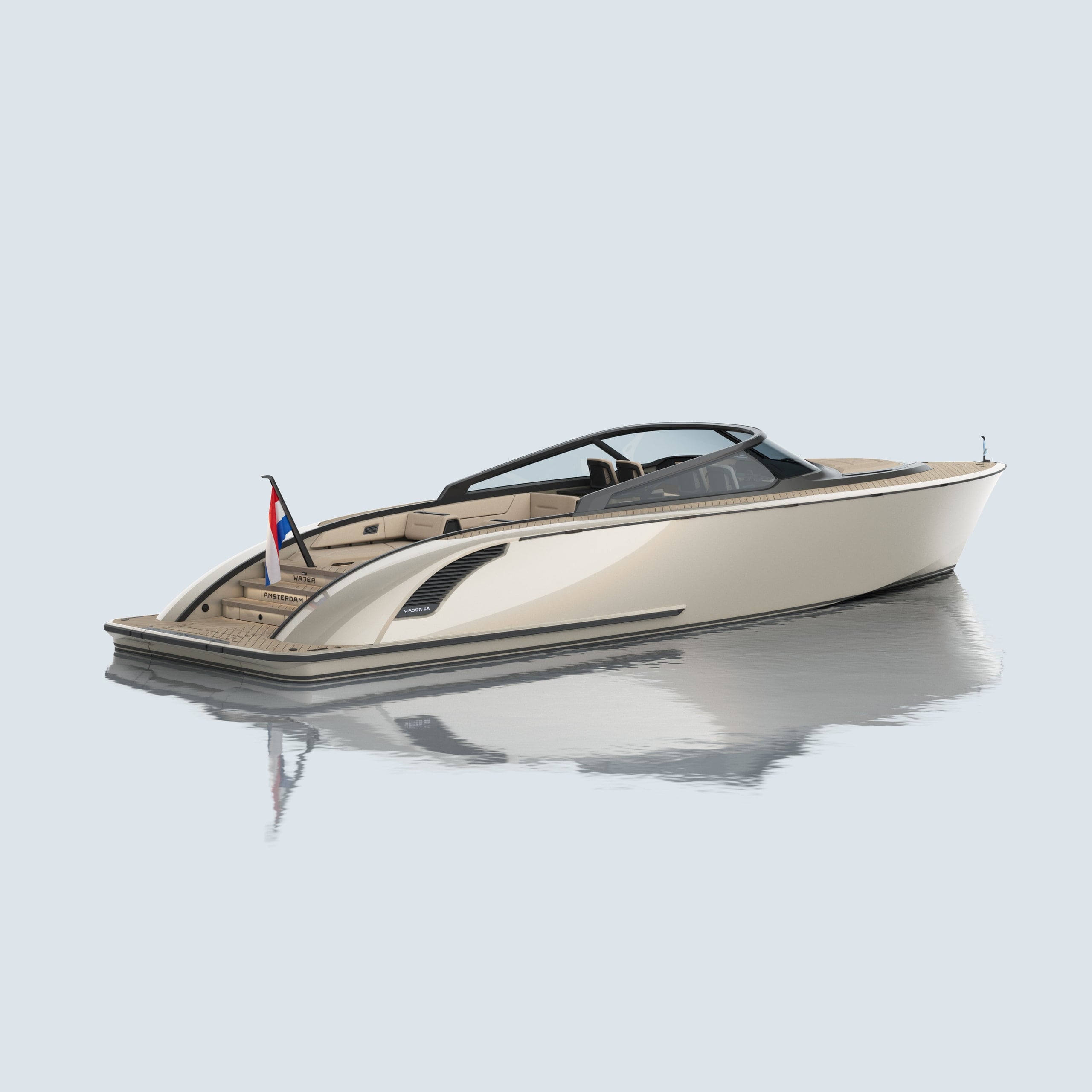
- Wajer - the 38, 55, and 77 cover the entire size range from compact day chase up to mid-band hardtop.
- Pascoe - the SY and SL series include both garage tenders and chase boats; their build philosophy translates well to the larger hulls.
- Wally - the Wally Tender pioneered the modern day chase aesthetic.
- Hodgdon, cold-moulded carbon construction at the top of the market.
- Vanquish, Dutch builder strong in the 12 to 16 m sport hardtop band.
- Maori, Italian builder with a distinctive flush-deck aesthetic.
For the wider list, see chase boat builders.