The electric tender has spent a decade as a stand at the Monaco show: admired, then ruled out on range, charging and weight. In 2026 that framing is out of date, and the evidence is dated, not vibes. Here is what actually shifted, the hard numbers, and what still does not work.
Why 2026 is the inflection point
Three dated data points, not fashion:
- Capital is flowing into the segment. Candela announced a 30 million euro raise in March 2026, taking total funding to roughly 129 million euro, per electrive and Electrek. To be precise: that round funds a second factory in Poland for the P-12 ferry programme, not the C-8 tender directly. The signal is that the electric-marine segment is being capitalised at scale, which is what changes a novelty into a supply chain.
- A hydrogen flagship normalised zero-emission. Feadship's Breakthrough was named Motor Yacht of the Year at the 2026 World Superyacht Awards. When the boat of the year runs on hydrogen fuel cells, the conversation about electric auxiliaries moves from whether to how.
- New product keeps arriving. ZeroJet and McConaghy launched the MC-Zero range at the Palm Beach International Boat Show in March 2026, the MC-Zero 450 billed as the first twin-jet electric tender, per Yachting Pages.
Candela C-8: the foiling benchmark
The C-8 is the boat the listicles point at, and its numbers have moved between announcement and the current product, which we will not paper over.
| Spec | Originally announced | Current Candela page |
|---|---|---|
| Range | Up to 50 nm at 22 kn cruise | 57 nm at cruising speed |
| Top speed | 30 kn | 27 kn |
| Recharge | Around 2 hours | 11 kW AC: 6.5 h (0 to 100%); 135 kW DC: under 30 min (10 to 80%) |
| Battery | Not specified | 69 kWh, Powered by Polestar |
| Motor | C-POD direct drive | C-POD, 45 to 50 kW |
| Base price | 290,000 euro ex VAT | Not restated on the spec page |
| Dimensions | 8.5 m LOA | 8.5 m LOA, 2.5 m beam, 1,950 kg, 5 passengers plus driver |
Sources: the originally announced figures from BOAT International; the current figures from the official Candela C-8 page. The boat has been revised, so we state both with their source rather than averaging them into a number no one published. The honest read: a real-world 50ish nm at a 22 knot foiling cruise is genuine chase-tender range from a battery, not a harbour toy, but the top speed and range claims have softened slightly as the product matured.
Vita and Hodgdon: the limousine route
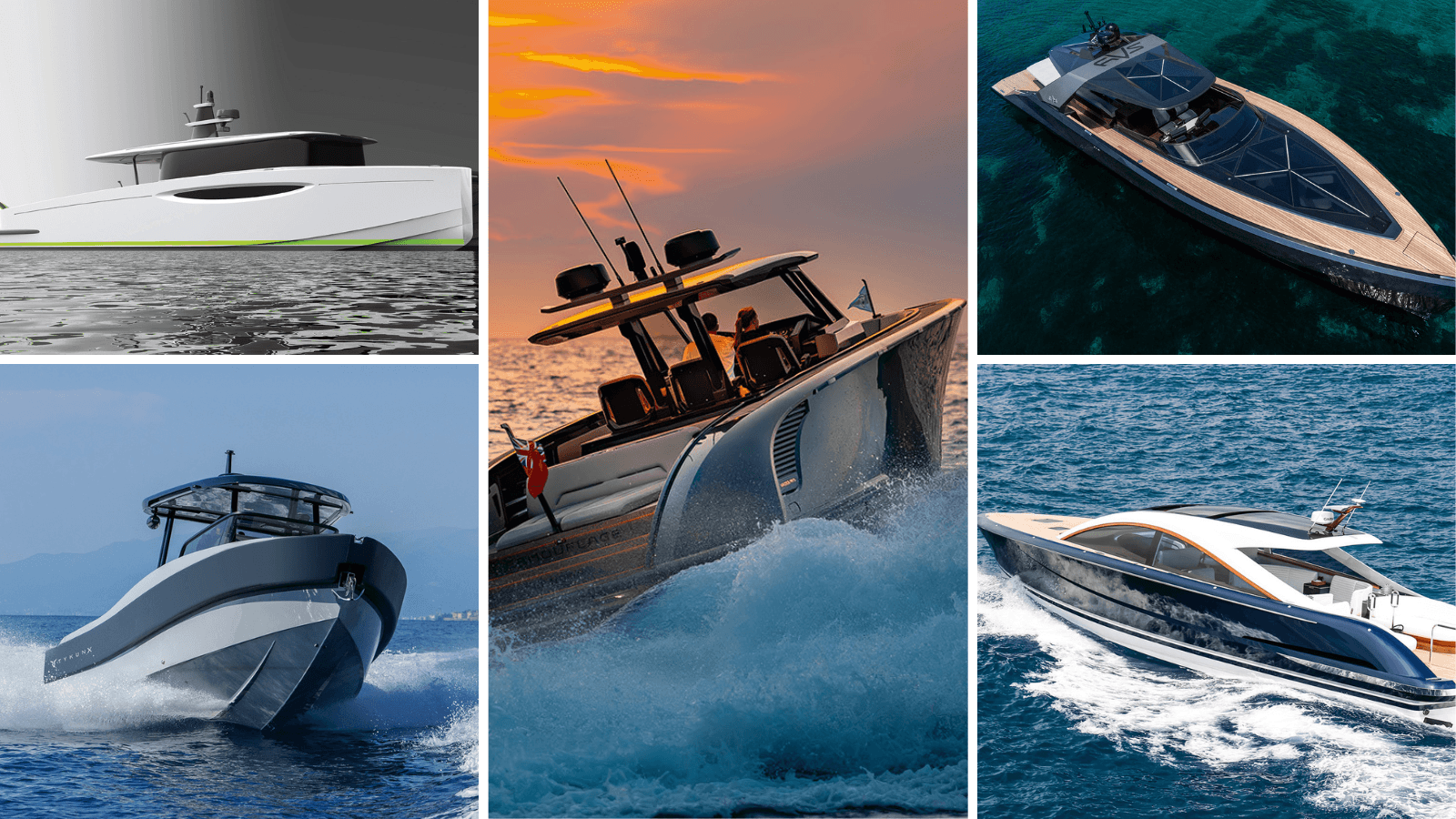
The other route is not foiling but a serious limousine on an electric drivetrain. Vita supplies V3 (220 kW, about 295 hp) and V4 (440 kW, about 590 hp) powertrains, and Hodgdon offers electric versions of its Venetian limousine: a 10.5 m forward-helm boat on a single motor and three batteries, and a 12 m aft-helm boat on twin motors and four batteries, with an estimated 20 to 50 nm range and dockside fast-charging in Cannes, Monaco and St Tropez or charging from the mothership, per Megayacht News. One caveat we will flag rather than hide: that Hodgdon and Vita reporting dates to 2020, so treat the model and power figures as the direction of travel and confirm the current configuration against the builder before specifying.
The Feadship Breakthrough halo
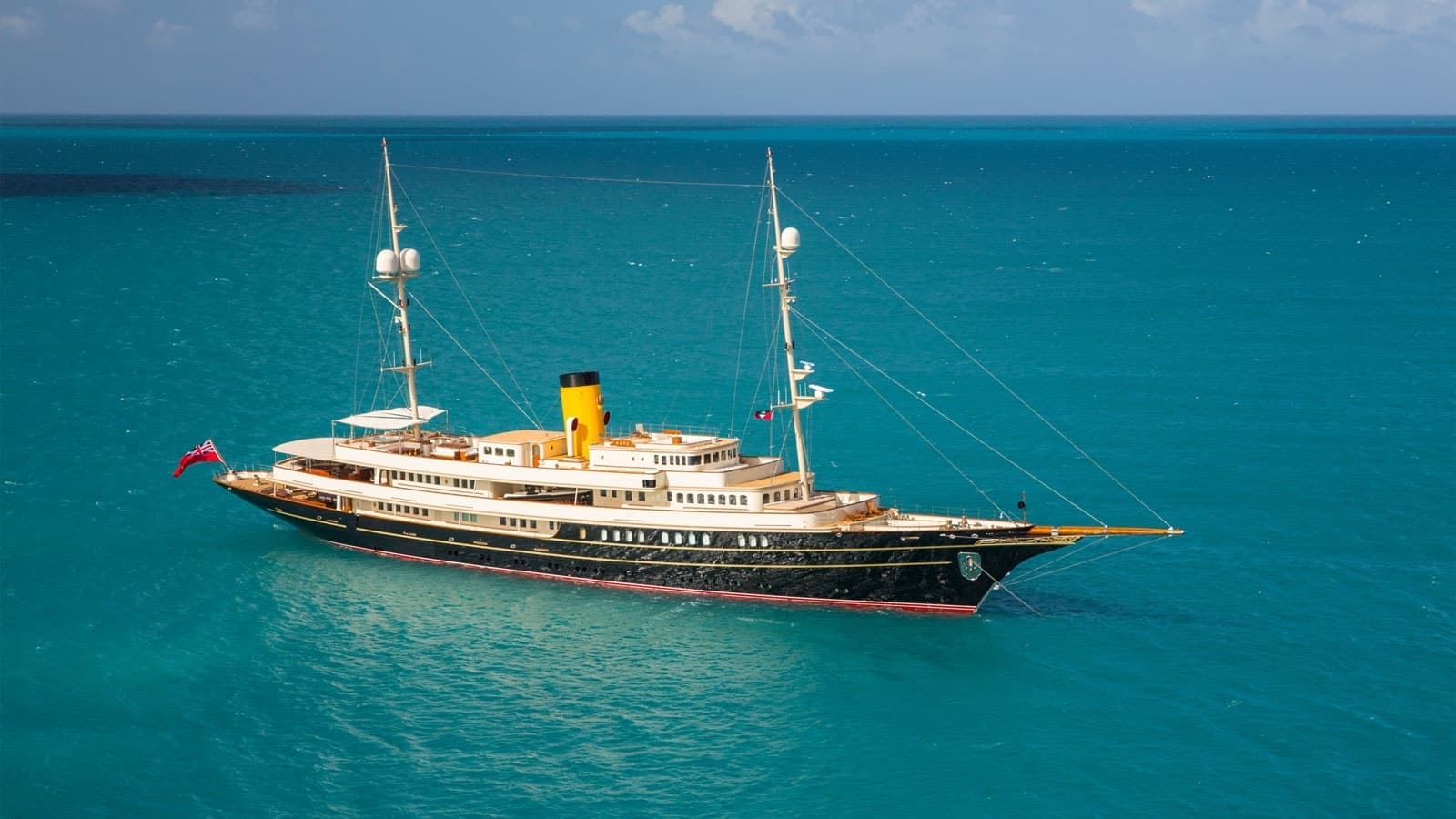
Feadship's Breakthrough, reported by BOAT International at 118.8 m (some coverage cites around 112 m, hence the variance), stores liquid hydrogen at minus 253 Celsius and runs 16 PowerCell fuel-cell systems generating roughly 3 MW, enough for about a week silent at anchor or 10 knots in protected zones with zero fossil fuel, under a regulatory framework built with Lloyd's Register and the Cayman Islands flag. Its tender programme is reported to be electric; we do not have a primary source for the tender's specifications, so we leave them unstated rather than guess. The point is the halo, not the tender: when the Motor Yacht of the Year is a hydrogen boat, electric auxiliaries stop being the eccentric choice.
What still does not work
This is the part the listicles skip, and it is the part owners need. Range is real but bounded: roughly 50 nm at cruise is the practical ceiling on the best of these boats, and it falls in cold water. Charging is the true constraint, not the battery: 6.5 hours from an 11 kW AC supply is an overnight, not a turnaround, and the sub-30-minute figure needs a 135 kW DC fast charger that has to be specified into the garage or found dockside. And the capital premium over a comparable diesel boat is still real. The technology has crossed from novelty to credible option for boats used inside their design envelope, which is a different and more useful claim than solved.
How to think about it for a programme
Electric now belongs on the shortlist for short-cycle limousine and day work, especially in noise and emissions-sensitive bays, and it should be weighed against a diesel jet boat on the numbers, not the narrative. Our evergreen electric and hybrid tenders guide covers the platforms, range and charging in full; the electric engine and hybrid engine glossary entries define the terms; the tenders pillar covers where it sits in a fleet. To weigh an electric option against a diesel equivalent on real boats, use the comparison tool.
The takeaway: 2026 is the inflection, not the finish line. Brief electric as a real option, hold it to the real numbers, and tell us the programme and we will run the electric-versus-diesel case from the owner's side.
FAQ
What is the range of an electric superyacht tender? The strongest current boats do roughly 50 to 57 nm at cruising speed (the Candela C-8), with limousine-style boats estimated around 20 to 50 nm. Range falls in cold water, and charging time, not range, is usually the binding constraint.
How much does a Candela C-8 cost? It was announced at 290,000 euro ex VAT. Candela does not restate a price on its current spec page, so treat the announcement figure as indicative and confirm with the builder.
How long does it take to charge a Candela C-8? Per Candela, about 6.5 hours from an 11 kW AC supply for 0 to 100%, or under 30 minutes from a 135 kW DC fast charger for 10 to 80%.
Are electric superyacht tenders any good yet? For short-cycle limousine and day work in calm, emissions-sensitive waters, yes. For long-range or cold-water duty, the range and charging limits still rule them out as a sole tender.
What is the best electric superyacht tender? It depends on the job: the Candela C-8 leads on foiling efficiency and range; the Vita-powered Hodgdon Venetian leads if you need a true limousine. Compare them on the numbers for your programme.